Abstract
The study investigated Women Participation in Leadership in the Transmission Company of Nigeria (TCN), Abuja – Nigeria (2010 -2022). The objectives were to evaluate the extent of inclusiveness of women in leadership positions; identify the elements of women’s leadership; factors affecting women’s leadership and strategies that could enhance their leadership in the public sector. The power sector is historically a male-dominated field. Nationally, while women make up 50% of the population, their participation in technical, engineering, and top-tier corporate positions in Nigeria is significantly lower. Studies show that 64% of skilled workers in Nigeria are women, but they occupy only 30.3% of senior corporate positions, highlighting a bottleneck in promotion to leadership. Poor number of Women in leadership at TCN is not due to a lack of qualified women, but a bottleneck in promotion and selection for senior technical positions. While the "top" of the pyramid reflects increased representation, the "middle" and "upper-middle" management levels where technical decisions are made still show a clear gender imbalance. Descriptive survey research design was used with a population of two thousand (2000) and accidental sampling technique was used to get a sample of sixty-five (65) percentages, frequencies and mean scores were used to analyze data. The instrument for data collection was structured questionnaire. Two theoretical frameworks have been identified to suit the trajectory of the discourse, namely, the liberal feminist theory and transformational leadership. Findings indicate that women were included to a great extent in various leadership positions in Transmission Company of Nigeria; they exhibit peculiar leadership elements that motivate staff to generate more output; some factors hinder women’s leadership in public sector and strategies that could address this include training, and creating equal opportunities for both genders among others. Statistics indicate the mean calculations in tables showing that all the points are accepted as significant as they are above the mid-point of 3.0 indicating that women leaders are knowledgeable (4.6); democratic in their style (4.4); carry everyone along (4.2); more supportive and show empathy to workers (4.2); have better communication skills (4.1); workers are more productive under women leaders as they have more positive influence (3.9); are more interested on the welfare of the staff (3.9); more innovative than men leaders (3.8) and they are more result oriented than men (3.4). The study recommends that more women be involved in leadership positions in workplaces as this engenders better productivity.
|
Published in
|
Social Sciences (Volume 15, Issue 2)
|
|
DOI
|
10.11648/j.ss.20261502.11
|
|
Page(s)
|
62-72 |
|
Creative Commons
|

This is an Open Access article, distributed under the terms of the Creative Commons Attribution 4.0 International License (http://creativecommons.org/licenses/by/4.0/), which permits unrestricted use, distribution and reproduction in any medium or format, provided the original work is properly cited.
|
|
Copyright
|
Copyright © The Author(s), 2026. Published by Science Publishing Group
|
Keywords
Women Participation, Assessment, Leadership, Transmission Company of Nigeria
1. Introduction
Women's participation in leadership within global power transmission companies remains low, with women holding less than 20% of board and senior management positions in the top 200 utilities worldwide. While the energy sector is undergoing a transition toward decarbonization that requires diverse leadership, traditional, male-dominated cultures, inflexible workplace policies, and unconscious biases continue to create a "glass ceiling" for women in senior technical and operational roles. In the broader energy sector, women hold roughly 18% of senior leadership roles, below the 25% economy-wide average. In electricity transmission and distribution, this percentage is often lower, with some studies indicating women occupy less than 15% of senior positions. Women in transmission and utility companies are disproportionately concentrated in administrative, human resources, and communications roles rather than in core technical and engineering positions. While globally sparse, some regions show higher representation due to specific policies; for example, in Russia, women in senior management of energy firms are higher (approx. 23%), compared to 3.1% in Japan. Although more women are entering the workforce at entry levels, their representation decreases significantly as seniority increases, with fewer than 5% of top executive positions or referred to as the CEO, Chair held by women in some studies.
Leadership involves setting the pace for others. It is being at the forefront in terms of direction and management of a group of people or an organization. Akpa, Asikhia and Adeleke
| [1] | Akpa, V.O, Asikhia, O and Adeleke, A [2021] Leadership; A review of definitions and theories, International Journal of Advances in Engineering and Management (IJAEM) 3 pp 272--291, Jan- Feb 2021. Available at www.ijaem.net 21st January 2022. |
[1]
analysed the different definitions of leadership over the years and by different authors. They define leadership as the ability to impress the will of the leader on those led and induce obedience, respect, loyalty and cooperation. The authors countered this definition on the same paper and were of the view that leadership is the capacity to influence others through inspiration and manipulation. This shows that the followers are not forced into obedience.
Consequently, this has created what is termed ‘gender imbalance’, that is, social and economic inequality that exists between the male and female gender in the workplace. Gender imbalance is a subject of discourse in almost all spheres of life in the world, due to the natural order of man and traditional gender role attached to specific gender. Globally, the issue of women under representation in leadership positions in the corporate world, private and public establishments and other industries like health, education, and finance has been generic.
Based on a report by the United Nations Development Program, (UNDP
| [2] | UNDP (2021) Uncertain times, Unsettled lives: Shaping our future in a transforming world. United Nations Development Program. |
[2]
it is stated that women are two-third less likely to be employed in the formal sector due to large scale production, and difficulty in entry due to lack of education. In 2005, the report indicates that only 5% of female gained employment in industry, 20% in services, 23% in sales and only 6% in the professional, technical, administrative and managerial positions in the public sector in sub-Sahara Africa as stated by Fapohunda,
| [3] | Fapohunda, T. (2012), Women and the Informal sector in Nigeria: Implications for Developmet, British Journal of Arts and Sciences, 4(1), 35-45. |
[3]
). This shows the level of inequality female gender faces.
The transmission company of Nigeria includes all establishments, both private or public that are involved in the generation, transmission, distribution and maintenance of electricity in Nigeria. The Nigerian Electricity Regulatory Commission (NERC), GenCos, DisCos, Transmission Corporation of Nigeria, Federal Ministry of Power, producers and suppliers of electricity accessories like cables, poles, different types of bulbs and chandeliers etc. This sector provides employment for people in diverse positions like administrators, engineers, contractors or private investors, artisans, traders, factory owners and workers etc.
Women make up about 50% of Nigeria’s population. Considering both the intrinsic and extrinsic values of gender equality, women and girls are now seen as very central to Nigeria’s transformative agenda, without which it will be difficult to achieve any sustainable development and growth. Families are healthier, safer and better nourished when the women raising them are more knowledgeable and capable of meeting their needs as stated by Aina
| [4] | Aina, O, (2015), The Role of Public Service in women empowerment, Innovation and Accessible Service Delivery; The Nigerian Experience, National Semnar on the Role of Public Service in Women Empowerment, Innovation and Accessible Service Delivery, (pp 1-29), Osun. |
[4]
. Thus, taking a gender perspective helps to look at the impact of gender on people's social roles and interactions. Successful implementation of the policy, programme and project goals of international and national organisations is directly affected by the impact of gender and, in turn, influences the process of social development. Gender is an integral component of every aspect of the economic, social, daily and private lives of individuals and societies, and of the different roles ascribed by society to men and women. Against these foregoing backdrops, this study is on women and leadership in public sector with a focus on the transmission company of Nigeria, Maitama, Abuja.
1.1. Statement of Problem
Women are capable of making giant strides if given the opportunity to lead organizations. Naturally, women are caring and manifest the characteristic milk of kindness. Consequently, leadership by women is always distinct with the drive to make positive changes and carry every member of the team along. Offermann and Foley
assert that organisational research suggests that female leaders may bring a unique constellation of leadership related traits, attributes and behaviors to the workplace that may provide advantages to their organizations.
The legacies of Ms Angela Merkel, the former chancellor of Germany, Ms Ellen Johnson Sirleaf, the twenty- forth president of Liberia and the first elected African President, late Professor (Mrs) Dora Akunyili and the globally renowned economist Dr Mrs Ngozi Okonjo-Iweala a trail blazer and the present director general of the World Trade Organisation are all proof of the great potentials that women can unleash in the workplace.
Women leaders are however far in between in developing world like Africa and particularly in Nigeria despite their great advantages. It is truism that the society is patriarchal in nature, this phallocentric and masculine structure hitherto affects all strata of the economy, leadership inclusive. From time immemorial, the woman has suffered from under representation, misrepresentation and social, economic and political inequalities due to cultural and crude belief systems. As a result of these, the organisational, managerial and leadership structures in terms of positions of the different sectors in Nigeria seems to be gender bias.
In Nigeria, the Transmission Company of Nigeria is a male dominated public service sector. This could be because the career paths prevalent are considered male in nature. It has been observed by the researcher’s on the job experience that a few women are in the leadership positions in the industry. This could be because they seem not to be given the chance to lead.
So many studies have been carried out on women leadership in other public sector but none has been conducted in Transmission Company of Nigeria. This is to the researcher’s best of knowledge. It is based on this that the research on women leadership in the public sector: a study of Transmission Company of Nigeria is carried out to fill this gap.
1.2. Aim and Objectives of the Study
The aim of this research is to investigate women leadership in the public sector, with a focus on the transmission company of Nigeria, Maitama, Abuja. The following are the objectives of the study:
1) To evaluate women inclusiveness in leadership positions in the Transmission Company of Nigeria, Abuja;
2) To identify the elements of leadership that characterize women in key positions in the Transmission Company of Nigeria, Abuja;
3) To determine the factors affecting women in leadership in the Transmission Company of Nigeria, Abuja;
4) To suggest measures that could enhance women in leadership in the Transmission Company of Nigeria, Abuja.
1.3. Research Questions
1) What is the extent of women inclusiveness in leadership positions in the Transmission Company of Nigeria, Abuja?
2) What are the elements of leadership that characterize women in key positions in the Transmission Company of Nigeria, Abuja?
3) What factors affect women in leadership in the Transmission company of Nigeria, Abuja?
4) What are the measures that could enhance women in leadership in the Transmission Company of Nigeria?
2. Review of Related Literature and Theoretical Framework
This chapter is dedicated to reviewing relevant related literature that is germane to the understanding of this dissertation. In this bid, it will review different concepts such as women, leadership, women leadership, leadership in the public sector, representation of women leadership in the public sector, elements of women leadership in the public sector, factors affecting women leadership in the public sector and measures that could enhance women leadership in the public sector and electricity sector in Nigeria. Two theoretical frameworks have been identified to suit the trajectory of the discourse, namely, the liberal feminist theory and transformational leadership theory. Related empirical studies were reviewed to provide credence to the discourse and solidify the arguments presented in the work.
2.1. Theoretical Framework
This research hinges on two theories, namely liberal feminist theory and transformational leadership theory. These theories are important to this discourse as they complement each other in the limitations and strengths. Whereas the liberal feminist theory emphasises the need for equal women representation in all strata of the society, especially in public sector and governance, transformational leadership complements the need to efficient leadership in governance as a way to bring in to fruition to yearnings of liberal feminist goals, hence, covering the lacuna of liberal feminist theory in the study.
2.2. Liberal Feminist Theory
Feminism discourse has enjoyed series of arguments and debates over the years. The theory and movement seek for the eradication of discrimination, segregation and social, economic and political inequalities against women in the society. It is a social movement that seeks for equality in the societal perception and treatment of both male and female gender economically, socially, politically and other spheres. Feminism involves political and sociological theories and philosophies concerned with issues of gender difference, as well as a movement that advocates gender equality for women and campaigns for women's rights and interests. The feminist goal is to usher in an integrated human society, one that is free of gender imbalance. The primary aim of feminism is to expunge from society all forms of male dominance, oppression, subjugation and marginalization of women in all aspects of human existence social, political, religious, economic, intellectual and cultural. The fight for these equalities span decades waves, each wave yearning for different purpose. The first wave of the movement dated from 19th to early 20th century, while it concerned itself with suffrage, working conditions and educational rights, emerging out of an environment of urban industrialism and liberal, socialist politics. Rampton
argues that the goal of this wave was to open up opportunities for women, with a focus on suffrage. Furthermore, the second wave of the movement was from 1960’s to early 1980’s and it brought forward issues like inequality of laws, cultural inequalities and role of women in society. The second wave began in the 1960s and continued into the 90s. According to him,
This wave unfolded in the context of the anti-war and civil rights movements and the growing self-consciousness of a variety of minority groups around the world. In this phase, sexuality and reproductive rights were dominant issues, and much of the movement's energy was focused on passing the Equal Rights Amendment to the Constitution guaranteeing social equality regardless of sex.
The second wave of the movement is influenced by women’s struggle to liberate themselves from stereotypes and an attempt to create social and political consciousness among women. The second wave feminism is a heightened form of the first wave. This wave is termed radical wave where aggressive campaigns were done to assert the role of women in the society and expunge all kinds of stereotype, male dominance and oppression. This wave saw the society from the Marxist approach where the women are the proletariat and the men are the bourgeoisie. It is imperative to understand that second wave feminism introduced the different forms and types of feminist perspectives ranging from radical, socialist and liberal feminist theory. These offshoots of feminist approach are in a bid to explain and address dynamics of gender inequalities in the society.
Liberal feminist theory is of the view that gender inequality between sexes in the social structure due to the unavailable economic and social resources to the female gender. These resources are in form of education and employment that the society has traditionally and culturally seen to be the domain of male gender. Liberal feminist theory seeks for recognition and protection of women’s individual autonomy, right to full equality, dignity and respect as argued by Bimer
| [7] | Bimer, E. E, Alemeneh G. M, (2018). Liberal Feminism: Assessing its compatibilty and Applicability in Ethiopian context, International Journal of Sociology and Anthropolgy, vol 10(6) pp 59-64. |
[7]
. The understanding of liberal feminist theory stems from the comprehension of liberalism. Liberalism is a political and economy philosophy that hinges on individual economic freedom. Liberalism and feminism had forged to create a powerful political and theoretical movement – liberal feminism – that vastly improved women’s lives. Liberal Feminist Theory posits that women should be free from discrimination and have right to life and equal political and economic opportunities. At the base of the theory, liberal feminist fight against gender discrimination, which is done through promotion of and formulation of policies and laws that will engender economic and social equality between sexes. In corroboration to this submission.. Thus, one of the issues liberal feminism tries to address is the reformation of government public policies about women’s equality under the law. This means that in policy formulation and implementation women should be considered so that such policies will be engendered rather than endangered. However, according to UNDP
any policy that is not engendered is endangered. This is imperative because the culturally and traditionally, women are at a disadvantage due to traditional gender role. Thus, the goal is to achieve parity in women representation in governance and business.
Liberal feminist theory acknowledges that gender disparity exists in the society. Liberal feminists are of the opinion that female subordination and concurrent discrimination are rooted in customary status quo in a bid to alienate women from economic, social and political gains in the society, hence, their oppression and consequently, the dire need for reformation. In addressing what the liberal feminists saw as “the woman question,” they concluded that the emancipation of women would occur only with the destruction of capitalism and when women would be freed from dependency on men and the family and be involved in “productive” labor. Giddens
| [9] | Giddens A, (2001) Sociology Introductory Readings.Polity, (4th ed) PolityPress. |
[9]
sees liberal theory as a “feminist theory that believes gender inequality is produced by reduced access for women and girls to civil rights and allocation of social resources such as education and employment”. From the above submission, it can be argued that the liberal feminist theory acknowledges the existence of disparities in society that are gender related, however, the onus is on the individuals affected to improve their situation as noted by Samkange
| [10] | Samkangye, W, (2015) The Role of Labelling in Education: A Focus on Exceptional learners,. www.semanticscholar.org |
[10]
. Based on this, it hoped that education and empowerment will change the stereotypes that exist in society. For this to be achieved, there has to be improvement in the participation of women in such areas as politics and development, of which education and empowerment will improve the socialization process. This is so because, ignorance is one of the reasons for inequalities and unde rrepresentation of women. Hence by way of education and empowerment, change may suffice.
2.3. Assumptions and Limitations of the Liberal Feminist Theory
According to Samkange the liberal feminist theory assumptions are that
1) Individual ignorance contributes to gender prejudices
2) Gender disparities can be addressed through empowerment and education
3) Reformation on gender inequality can be done gradually through advocacy for right policies that promotes gender equality without upsetting the status quo.
Inasmuch as liberal feminist theory has helped in augmenting and addressing the issue of discrimination and gender inequality through policy formulations and laws, much work is still needed to be done as the theory is not without limitations in its practice. Based on this, the following are the limitations of the liberal feminist theory as postulated by Samkange.
The liberal feminist theory still is limited in the representation women in politics. Inequalities still exist un politics, public sector and developments. This is so because of male chauvinism in traditional African culture according to Rampton
.
This is obvious in the Nigeria social system. Ochuba states that for instance,President Buhari’s administration appointed only seven (7) women among the forty-three (43) ministerial list to the Federal Executive Council.
| [11] | Ochuba, O, (23 July 2019), The women on Buhari’s Ministerial List. |
[11]
. This account for 16.3% of women representation against 83.7% of men domination despite education and women empowerment programmes in Nigeria and Africa in general.
Secondly, the theory is limited based on the fact that the social structure enforces gender stereotype.
Howbeit, this theory is adopted for this research because liberal feminism is fundamental in initiating economic and social policies that seeks to create the balance and parity between men and women in representation and employment. And also, allows women to freely operate and be given the equal platform to advance in leadership positions and also be given equal representation in decision-making positions. In this wise, policies that promotes women inclusiveness allows women to free themselves from the shackles of oppression, discrimination and marginalization, dependency from male folks, while it will engineer them to contribute to nation building and public sector development through quality leadership. The deconstruction of patriarchy when it comes to economic and social advantages is the goal of liberal feminist. Bailey
opines that the tenets of liberal feminism emphasize equity initiatives in legal political and social spheres, and its visibility as guiding philosophy in women organization. The primary motive is ameliorating gender inequality and support women equality. It is in realization of this that the Nigerian government and administrations have adopted and implemented various policies, case in point, National Gender Policy of 2006
| [13] | National Gender Policy, (2006) National Gender Policy, Nigeria: Federal Ministry of Women Affairs and Social Development. |
[13]
that will engender equality in different spheres of the country and economy, one of this is the public sector.
3. Methodology
3.1. Research Design
The research design adopted for this study is the descriptive survey research design according to Aina
| [4] | Aina, O, (2015), The Role of Public Service in women empowerment, Innovation and Accessible Service Delivery; The Nigerian Experience, National Semnar on the Role of Public Service in Women Empowerment, Innovation and Accessible Service Delivery, (pp 1-29), Osun. |
[4]
survey research is a systematic and comprehensive collection of information about the opinions, attitudes, feelings, beliefs, and behaviours of people. In his description, data is collected through interviews, observation, questionnaire from a relatively large population. The survey design considered the most suitable for this study because data on women’s leadership will be collected from electricity industry workers using questionnaire and interview as instruments.
3.2. Population of the Study
The population of this study include all senior employees of the Transmission Company of Nigeria (TCN) and others in the electricity value chain. The population of the staff in the selected workplaces is two thousand (2,000). The choice of the senior employees is because these are the ones that lead, supervise or manage other staff and resources at different level of operation.
3.3. Sample Size and Sampling Technique
The sampling technique used for this study is the accidental sampling. The sample size reached is sixty-five (65). This is because the senior staff at TCN are mostly always at the field, supervising, transmitting or distributing electricity. It was very difficult getting the respondents on seat to fill the questionnaire.
3.4. Method of Data Collection
The data was collected by the researcher through trained research assistants in the different departments of the Transmission company of Nigeria.
Instrument for Data Collection
The instrument employed for the research is a five (5) point Likert-type scaled questionnaire and multiple options designed to elicit opinions and views from respondents on women’s leadership in the public sector: a study of the electricity service industry in the FCT.
The questions were divided into two sections. These include the respondents’ demographic responses and the second section is to elicit responses on the title under study. The questionnaire is entitled “Questionnaire on Women in Leadership in the Public Sector: A Study of the Transmission Company of Nigeria, Abuja. (QWLPSTCNA).The second section of the questionnaire was divided into four sections- B, C, D and E. Section B was structured to get responses on Research Question 1- What is the extent of women inclusiveness in leadership positions in the Transmission Company of Nigeria, Abuja? Section C was based on Research Question 2- What are the elements of leadership by women in key positions in the Transmission Company of Nigeria, Abuja? Section D was also structured to elicit responses Research Question 3 namely What factors affect women in leadership in the Transmission Company of Nigeria, Abuja? Finally, Section D was structured for responses on Research Question 4 viz What are the measures that could enhance women in leadership in the Transmission Company of Nigeria, Abuja?
The Likert’s questionnaire is structured Strongly Agree (SA-5), Agree (A-4), Undecided (U-3), Disagree (D-2) and Strongly Disagree (SD-1). With all calculations below 0.1 – 2.49 designated not accepted and those above 2.5 – 5.0 as accepted.
3.5. Administration of the Instrument
The questionnaire will be administered randomly to senior staff of the Transmission Company of Nigeria in the FCT. Trained research assistants will be required to distribute and collect the questionnaire responses from the senior staff at the Transmission Company of Nigeria..
3.6. Method of Data Analysis
The Statistical Package for Social Sciences (SPSS) version 21 was used to analyse the data collected from the questionnaires administered. The data collected were analyzed by the researcher using five -point Likert tables frequency analysis, mean scores and percentages. A mid-point of 3.0 mean score was used to separate the significant and the rejected items.
4. Data Presentation, Analysis and Interpretation
In this chapter, the data collected through questionnaire are presented and analyzed. They are organized, and analyzed using the mean score (x) and simple percentage (%). They are presented in different tables. The criterion mean is 3.0 on a 5 point Likert scale.
Table 1. Distribution and return rate of the questionnaire.
Respondents | Sample | Copies distributed | Respondents | Copies returned | Percentage returned |
Senior Staff | 65 | 100 | 65 | 65 | 65 |
Data in
Table 1 above shows that a hundred (100) copies of questionnaire were distributed. These were senior staff in Transmission Company of Nigeria (TCN). This is the sample distributed. The return rate was sixty-five percentage (65%). This is so because most of these staff are always in the field and it was very difficult getting them in the offices to fill the questionnaire.
5. Demography of the Respondents
Table 2. Gender Distribution.
S/N | ITEM | Frequency | Percentage |
1 | Male | 40 | 62 |
2 | Female | 25 | 38 |
| Total | 20 | 100 |
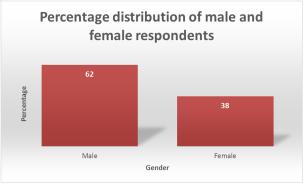
Figure 1. Percentage distribution of male and female.
Table 2 represents the gender distribution of the respondents. In descending order, the male senior staff respondents were forty (40) and constitutes sixty-two percent (62%) while the female senior staff were twenty-five (25) respondents. This represents twenty-five percent (25%). This shows that TCN has more male senior staff than the females.
Research Question 1: What is the extent of women inclusiveness in leadership positions in the electricity service industry in the FCT?
Table 3. Extent of women inclusiveness in leadership positions.
S/N | Items | VGE | GE | ND | LE | NE | Mean | Dec |
14 | Chief Executive officers | 45 | 15 | 4 | 1 | 0 | 4.6 | A |
15 | Marketing officers | 34 | 28 | 2 | 1 | 0 | 4.5 | A |
16 | Supervisory positions | 35 | 26 | 4 | 0 | 0 | 4.5 | A |
17 | Administrative positions | 31 | 33 | 1 | 0 | 0 | 4.5 | A |
18 | Engineering services (Generation, Distribution, installation, repairs, maintenance etc) | 30 | 30 | 5 | 0 | 0 | 4.4 | A |
19 | Lower cadre staff (Cleaners, security etc | 28 | 32 | 5 | 0 | 0 | 4.4 | A |
20 | Customer service | 29 | 31 | 3 | 2 | 0 | 4.3 | A |
21 | Management and decision making positions | 18 | 39 | 3 | 3 | 2 | 4.0 | A |
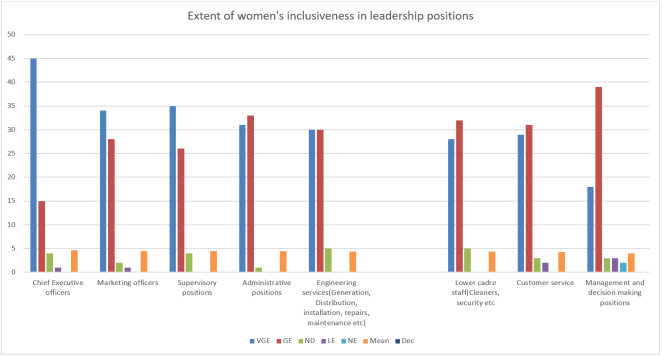
Figure 2. Extent of women’s inclusiveness in leadership.
Table 3 shows the extent of women inclusiveness in leadership positions. In descending order the extent include: Chief Executive officers 4.6; Marketing officers (4.6); Supervisory positions (4.5); Administrative positions (4.5); Engineering services (Generation, Distribution, installation, repairs, maintenance etc) (4.4); Lower cadre staff (Cleaners, security etc (4.4); Customer service (4.3) and Management and decision making positions (4.0).
Section C
Research Question 2: What are the elements of leadership by women in key positions in the electricity service industry in the FCT?
Table 4. Elements of leadership by women in key positions.
S/N | Items | SA | A | ND | D | SD | X | Dec |
22 | Women leaders are knowledgeable | 36 | 26 | 2 | 1 | 0 | 4.6 | A |
23 | They are democratic in their style | 35 | 26 | 2 | 2 | 0 | 4.4 | A |
24 | They carry everyone along | 30 | 23 | 9 | 3 | 0 | 4.2 | A |
25 | They are more supportive and empathic to workers | 33 | 16 | 12 | 4 | 0 | 4.2 | A |
26 | They have better communication skills | 27 | 25 | 8 | 3 | 2 | 4.1 | A |
27 | Workers are more productive as women leaders have more positive influence | 22 | 23 | 15 | 3 | 2 | 3.9 | A |
28 | They are more interested on the welfare of the staff. | 23 | 21 | 16 | 4 | 0 | 3.9 | A |
29 | They are more innovative than the men leaders | 20 | 20 | 14 | 8 | 8 | 3.8 | A |
30 | They are more result oriented than men | 12 | 19 | 20 | 11 | 3 | 3.4 | A |
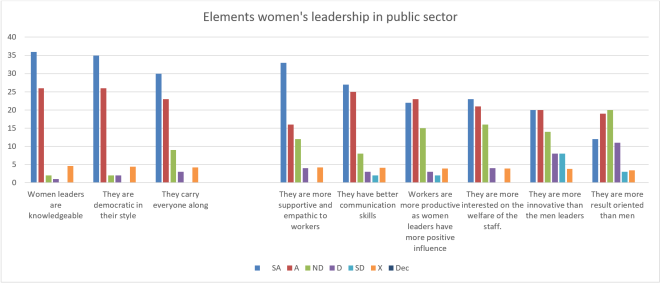
Figure 3. Elements women’s leadership in public sector.
Table 4 indicates the elements of leadership by women in leadership positions. All the points are accepted as significant as they are above the mid-point of 3.0. They include the following in descending order: Women leaders are knowledgeable (4.6); They are democratic in their style (4.4); They carry everyone along (4.2); They are more supportive and empathic to workers (4.2); They have better communication skills (4.1); Workers are more productive as women leaders have more positive influence (3.9); They are more interested on the welfare of the staff (3.9); They are more innovative than the men leaders (3.8) and They are more result oriented than men (3.4).
Section D
Research Question 3: What factors affect women in leadership in the electricity servicing industry in the FCT?
Table 5. Factors affecting Women’s leadership in the public sector.
S/N | Items | SA | A | ND | D | SD | X | Dec |
31 | Male domination in leadership positions | 38 | 9 | 5 | 5 | 8 | 4.1 | A |
32 | Biasness and apathy by employers of labour | 25 | 24 | 6 | 4 | 6 | 3.9 | A |
33 | Inadequate political will by the government to appoint women leaders | 20 | 22 | 9 | 4 | 10 | 3.6 | A |
34 | Low percentage of Women leaders available | 14 | 33 | 8 | 1 | 9 | 3.6 | A |
35 | Negative stereotypes about women leaders | 20 | 19 | 9 | 10 | 7 | 3.5 | A |
36 | Electricity service not regarded as a work for women | 20 | 18 | 5 | 5 | 17 | 3.3 | A |
37 | Work environment not favourable for women leaders. | 19 | 17 | 6 | 5 | 18 | 3.2 | A |
38 | Maternal issues and responsibilities | 16 | 17 | 8 | 11 | 13 | 3.2 | A |
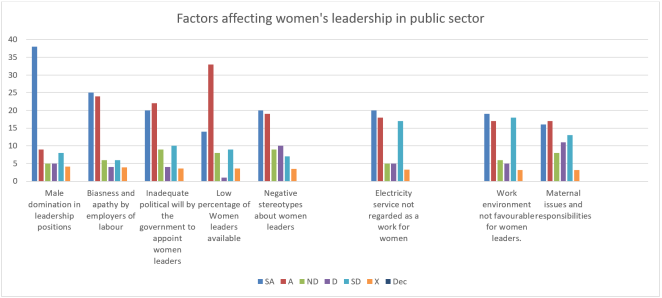
Figure 4. Factors affecting women’s leadership in public sector.
In
Table 5 the factors affecting women in leadership positions in the public sector are shown. All points are accepted as significant as they are above the mid-point of 3.0. From the highest to the lowest include: Male domination in leadership positions (4.1); Bias and apathy by employers of labour (3.9); Inadequate political will by the government to appoint women leaders (3.6); Low percentage of Women leaders available (3.6); Negative stereotypes about women leaders (3.5); Electricity service not regarded as a work for women (3.3); Electricity service not regarded as a work for women (3.2) and Electricity service not regarded as a work for women (3.2).
Section D
Research Question 4: What are the measures that could enhance women’s leadership in the electricity service industry?
Table 6. Measures that could enhance women’s leadership.
S/N | Items | SA | A | ND | D | SD | X | Dec |
41 | Creating equal opportunities for both genders leadership positions | 39 | 23 | 1 | 1 | 1 | 4.5 | A |
42 | Providing adequate work environment favourable to women leaders | 40 | 22 | 1 | 1 | 1 | 4.5 | A |
43 | Aggressive orientation to change people’s perception on the potentials women leaders | 28 | 27 | 8 | 2 | 2 | 4.2 | A |
44 | Employers of labour encouraging more women to take up leadership positions | 30 | 30 | 2 | 3 | 0 | 4.2 | A |
45 | Creating more training opportunities to Women leaders in the electricity service sector | 26 | 31 | 1 | 5 | 2 | 4.1 | A |
46 | Removal of gender restriction at electricity workplaces | 22 | 31 | 9 | 0 | 3 | 4.1 | A |
47 | Deliberate efforts by government to appoint more women leaders. | 28 | 22 | 8 | 2 | 2 | 4.0 | A |
48 | Providing better work conditions to accommodate women peculiarities | 22 | 32 | 4 | 4 | 3 | 4.0 | A |
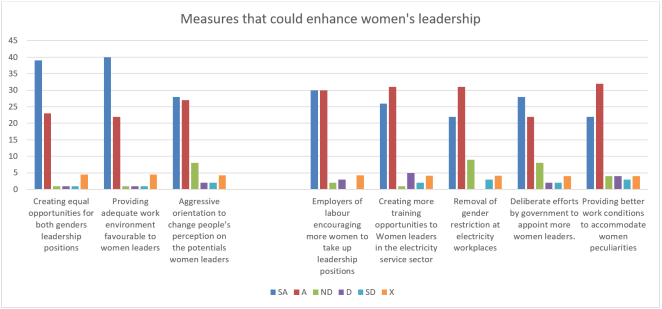
Figure 5. Measures that could enhance women’s leadership.
In
Table 6 the strategies that could enhance women inclusiveness in the public sector. All the mean scores were accepted as significant. They include: Creating equal opportunities for both genders leadership position (4.5); Providing adequate work environment favourable to women leaders (4.5); Aggressive orientation to change people’s perception on the potentials women leaders (4.2); Employers of labour encouraging more women to take up leadership positions (4.2); Creating more training opportunities to Women leaders in the electricity service sector (4.1); Removal of gender restriction at electricity workplaces (4.1); Removal of gender restriction at electricity workplaces (4.0) and Removal of gender restriction at electricity workplaces (4.0).
6. Discussion of Major Findings
The study revealed that women are represented to a great extent in the Transmission Company of Nigeria, in the Federal Capital Territory, Abuja. It also shows that women in leadership possess various positive elements that make them dynamic and more result oriented than their male counterpart in such positions. It also shows that there are many factors hindering the effective inclusiveness of women in leadership position like male domination and stereotypical policies. Measures that enhance women representation in leadership positions in the public sector includes: deliberate efforts by government to appoint more women leaders, providing better work conditions to accommodate women peculiarities among others.
7. Recommendations
The following recommendations are made based on the findings of this study:
1) Government and private employers of labour should create equal opportunities for both genders at leadership positions. This will give women the room to aspire for higher positions.
2) Training opportunities should be given to women on how to manage leadership. This will enable them learn how to navigate home and workplace responsibilities effectively.
3) Government should intentionally ameliorate the hurdles limiting women in leadership.
4) More orientation should be constantly given to the public to change the stereotyped status quo on women ascending leadership positions.
8. Contributions to Knowledge
The study has contributed to knowledge in the area of women’s leadership in the public sector especially in the Transmission Company of Nigeria, Abuja. The knowledge contained herein can be used as a baseline information for policy making and implementation by both the government and private sector as a positive measure for gender mainstreaming.
The elements of leadership by women in leadership positions transcends their domestic, caregiver to democratic style; they carry everyone along; they are more supportive and show empathy to workers needs; they have better communication skills; workers become more productive as women leaders have more positive influence; they are more interested on the welfare of the staff as a measure to enhance organizational productivity; they are more innovative than the men leaders due to the multiple roles of women and they are more result oriented than men.
Combating the factors affecting women in leadership positions in the public sector is shown as panacea for national rebirth. The urgent need to mitigate the problem of male domination in leadership positions; bias and apathy by employers of labour especially against women; inadequate political will by the government to appoint women leaders; low percentage of women leadership available; negative stereotypes about women leaders and electricity service not regarded as a work for women.
Abbreviations
TCN | Transmission Company of Nigeria |
UNDP | United Nations Development Program |
Author Contributions
Shajobi-Ibikunle Gloria: Conceptualization, Resources, Supervision, Visualization, Writing – review & editing
Adeyanju Temitope Peter: Methodology, Project administration, Resources
Osuhor Veonica Ngozi: Data collation, Investigation, Methodology, Resources, Writing – original draft
Conflict of Interest
The authors declare no conflicts of interest.
References
| [1] |
Akpa, V.O, Asikhia, O and Adeleke, A [2021] Leadership; A review of definitions and theories, International Journal of Advances in Engineering and Management (IJAEM) 3 pp 272--291, Jan- Feb 2021. Available at
www.ijaem.net
21st January 2022.
|
| [2] |
UNDP (2021) Uncertain times, Unsettled lives: Shaping our future in a transforming world. United Nations Development Program.
|
| [3] |
Fapohunda, T. (2012), Women and the Informal sector in Nigeria: Implications for Developmet, British Journal of Arts and Sciences, 4(1), 35-45.
|
| [4] |
Aina, O, (2015), The Role of Public Service in women empowerment, Innovation and Accessible Service Delivery; The Nigerian Experience, National Semnar on the Role of Public Service in Women Empowerment, Innovation and Accessible Service Delivery, (pp 1-29), Osun.
|
| [5] |
Offerman, R. Lymn and Foley, Kira, O (2020) Is there a female leadership advantage?.
https://doi.org/10.11093/acrefore/9780190224851.013.61
|
| [6] |
Rampton, B. (2019) Existential challenges and interactional sociolinguistics/linguistic ethnography,
https://www.taylorfrancis.com
|
| [7] |
Bimer, E. E, Alemeneh G. M, (2018). Liberal Feminism: Assessing its compatibilty and Applicability in Ethiopian context, International Journal of Sociology and Anthropolgy, vol 10(6) pp 59-64.
|
| [8] |
UNDP, (1995) Human Development Report,
https://hdr.undp.org
|
| [9] |
Giddens A, (2001) Sociology Introductory Readings.Polity, (4th ed) PolityPress.
|
| [10] |
Samkangye, W, (2015) The Role of Labelling in Education: A Focus on Exceptional learners,.
www.semanticscholar.org
|
| [11] |
Ochuba, O, (23 July 2019), The women on Buhari’s Ministerial List.
|
| [12] |
Bailey, J. M, (2016) Sexual Orientation, Controversy and Science, National Institute of Health,
https://wwwpubmed.ncbi.nlm.nih.gov
|
| [13] |
National Gender Policy, (2006) National Gender Policy, Nigeria: Federal Ministry of Women Affairs and Social Development.
|
Cite This Article
-
APA Style
Gloria, S., Peter, A. T., Ngozi, O. V. (2026). Assessment of Women Participation in Leadership in the Transmission Company of Nigeria, Abuja – Nigeria (2010 -2022). Social Sciences, 15(2), 62-72. https://doi.org/10.11648/j.ss.20261502.11
 Copy
|
Copy
|
 Download
ACS Style
Gloria, S.; Peter, A. T.; Ngozi, O. V. Assessment of Women Participation in Leadership in the Transmission Company of Nigeria, Abuja – Nigeria (2010 -2022). Soc. Sci. 2026, 15(2), 62-72. doi: 10.11648/j.ss.20261502.11
Copy
|
Download
AMA Style
Gloria S, Peter AT, Ngozi OV. Assessment of Women Participation in Leadership in the Transmission Company of Nigeria, Abuja – Nigeria (2010 -2022). Soc Sci. 2026;15(2):62-72. doi: 10.11648/j.ss.20261502.11
Copy
|
Download
-
@article{10.11648/j.ss.20261502.11,
  author = {Shajobi-Ibikunle Gloria and Adeyanju Temitope Peter and Osuhor Veronica Ngozi},
  title = {Assessment of Women Participation in Leadership in the Transmission Company of Nigeria, Abuja – Nigeria (2010 -2022)},
  journal = {Social Sciences},
  volume = {15},
  number = {2},
  pages = {62-72},
  doi = {10.11648/j.ss.20261502.11},
  url = {https://doi.org/10.11648/j.ss.20261502.11},
  eprint = {https://article.sciencepublishinggroup.com/pdf/10.11648.j.ss.20261502.11},
  abstract = {The study investigated Women Participation in Leadership in the Transmission Company of Nigeria (TCN), Abuja – Nigeria (2010 -2022). The objectives were to evaluate the extent of inclusiveness of women in leadership positions; identify the elements of women’s leadership; factors affecting women’s leadership and strategies that could enhance their leadership in the public sector. The power sector is historically a male-dominated field. Nationally, while women make up 50% of the population, their participation in technical, engineering, and top-tier corporate positions in Nigeria is significantly lower. Studies show that 64% of skilled workers in Nigeria are women, but they occupy only 30.3% of senior corporate positions, highlighting a bottleneck in promotion to leadership. Poor number of Women in leadership at TCN is not due to a lack of qualified women, but a bottleneck in promotion and selection for senior technical positions. While the "top" of the pyramid reflects increased representation, the "middle" and "upper-middle" management levels where technical decisions are made still show a clear gender imbalance. Descriptive survey research design was used with a population of two thousand (2000) and accidental sampling technique was used to get a sample of sixty-five (65) percentages, frequencies and mean scores were used to analyze data. The instrument for data collection was structured questionnaire. Two theoretical frameworks have been identified to suit the trajectory of the discourse, namely, the liberal feminist theory and transformational leadership. Findings indicate that women were included to a great extent in various leadership positions in Transmission Company of Nigeria; they exhibit peculiar leadership elements that motivate staff to generate more output; some factors hinder women’s leadership in public sector and strategies that could address this include training, and creating equal opportunities for both genders among others. Statistics indicate the mean calculations in tables showing that all the points are accepted as significant as they are above the mid-point of 3.0 indicating that women leaders are knowledgeable (4.6); democratic in their style (4.4); carry everyone along (4.2); more supportive and show empathy to workers (4.2); have better communication skills (4.1); workers are more productive under women leaders as they have more positive influence (3.9); are more interested on the welfare of the staff (3.9); more innovative than men leaders (3.8) and they are more result oriented than men (3.4). The study recommends that more women be involved in leadership positions in workplaces as this engenders better productivity.},
 year = {2026}
}
Copy
|
Download
-
TY  - JOUR
T1  - Assessment of Women Participation in Leadership in the Transmission Company of Nigeria, Abuja – Nigeria (2010 -2022)
AU  - Shajobi-Ibikunle Gloria
AU  - Adeyanju Temitope Peter
AU  - Osuhor Veronica Ngozi
Y1  - 2026/03/17
PY  - 2026
N1  - https://doi.org/10.11648/j.ss.20261502.11
DO  - 10.11648/j.ss.20261502.11
T2  - Social Sciences
JF  - Social Sciences
JO  - Social Sciences
SP  - 62
EP  - 72
PB  - Science Publishing Group
SN  - 2326-988X
UR  - https://doi.org/10.11648/j.ss.20261502.11
AB  - The study investigated Women Participation in Leadership in the Transmission Company of Nigeria (TCN), Abuja – Nigeria (2010 -2022). The objectives were to evaluate the extent of inclusiveness of women in leadership positions; identify the elements of women’s leadership; factors affecting women’s leadership and strategies that could enhance their leadership in the public sector. The power sector is historically a male-dominated field. Nationally, while women make up 50% of the population, their participation in technical, engineering, and top-tier corporate positions in Nigeria is significantly lower. Studies show that 64% of skilled workers in Nigeria are women, but they occupy only 30.3% of senior corporate positions, highlighting a bottleneck in promotion to leadership. Poor number of Women in leadership at TCN is not due to a lack of qualified women, but a bottleneck in promotion and selection for senior technical positions. While the "top" of the pyramid reflects increased representation, the "middle" and "upper-middle" management levels where technical decisions are made still show a clear gender imbalance. Descriptive survey research design was used with a population of two thousand (2000) and accidental sampling technique was used to get a sample of sixty-five (65) percentages, frequencies and mean scores were used to analyze data. The instrument for data collection was structured questionnaire. Two theoretical frameworks have been identified to suit the trajectory of the discourse, namely, the liberal feminist theory and transformational leadership. Findings indicate that women were included to a great extent in various leadership positions in Transmission Company of Nigeria; they exhibit peculiar leadership elements that motivate staff to generate more output; some factors hinder women’s leadership in public sector and strategies that could address this include training, and creating equal opportunities for both genders among others. Statistics indicate the mean calculations in tables showing that all the points are accepted as significant as they are above the mid-point of 3.0 indicating that women leaders are knowledgeable (4.6); democratic in their style (4.4); carry everyone along (4.2); more supportive and show empathy to workers (4.2); have better communication skills (4.1); workers are more productive under women leaders as they have more positive influence (3.9); are more interested on the welfare of the staff (3.9); more innovative than men leaders (3.8) and they are more result oriented than men (3.4). The study recommends that more women be involved in leadership positions in workplaces as this engenders better productivity.
VL  - 15
IS  - 2
ER  -
Copy
|
Download





 Share This Article
 Twitter
 Linked In
 Facebook